


Why You Can't Think Your Way Out of Anxiety: Understanding Overthinking

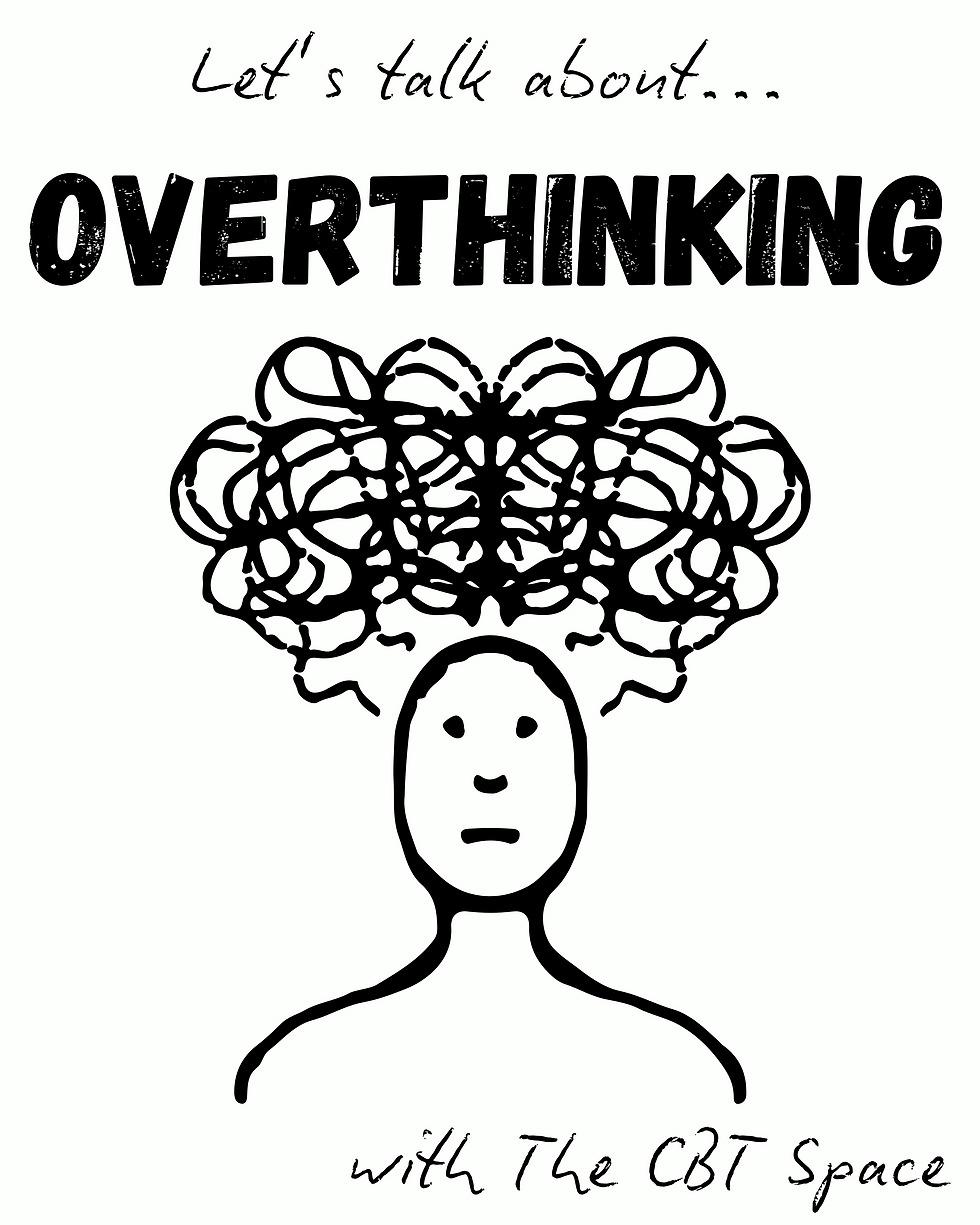
Overthinking and anxiety often go hand in hand. You might notice your mind constantly trying to figure things out. Replaying conversations. Going over “what if” scenarios. Trying to make sense of why you feel the way you do.
It can feel like if you just think about it enough, you’ll find an answer that settles everything. But more often than not, the opposite happens. The more you think, the more stuck you feel.
Overthinking & Anxiety: What does it looks like?
Overthinking and anxiety can show up in different ways:
Replaying past situations
Analysing conversations
Trying to predict what might happen
Questioning your own reactions
Searching for certainty
It often feels like you’re being careful, thorough, or trying to get things “right”.
Why It Feels Helpful
Overthinking isn’t a flaw. It’s your brain trying to solve a problem. When something feels uncertain or uncomfortable, your mind tries to work it out.
You might find yourself asking:
Why do I feel like this?
What if something goes wrong?
What should I have done differently?
It can feel productive - like you’re doing something to help yourself.
Why It Doesn’t Work
The difficulty is that anxiety isn’t a problem you can solve by thinking. There often isn’t a clear answer. So the mind keeps going. And going. And going.
Instead of finding clarity, you can end up with:
More doubt
More uncertainty
More anxiety
Overthinking keeps your attention focused inward, which can make everything feel more intense.
The Trap of Trying to “Figure It Out”
It’s easy to believe:
“If I can just understand this properly, I’ll feel better.”
But this can turn into a cycle:
You feel anxious → you start thinking → you feel more unsure → you think more.
The thinking becomes the thing that keeps it going.
How Thoughts Work in Anxiety
Thoughts are not problems to solve. They’re mental events - they come and go. But when we treat them like something we need to answer or resolve, we give them more importance.
The more attention we give them, the louder they seem.
What Helps Instead
Rather than trying to stop thoughts or find the “right” answer, the shift is in how you respond to them.
This can include:
Noticing when you’ve become caught up in thinking
Allowing thoughts to be there without trying to solve them
Gently bringing your attention back to what you’re doing
Letting thoughts come and go in the background
This isn’t about ignoring your thoughts. It’s about not getting pulled into them.
A More Helpful Way to Think About It
Instead of asking: “How do I stop thinking about this?”
It can be more useful to ask:
Is this helping me right now?
What would it look like to step back from this?
Over time, this helps your mind learn that it doesn’t need to keep trying to solve something that isn’t actually a problem.
The Takeaway
You can’t think your way out of anxiety. The main thing to take from this is that more thinking doesn’t always lead to more clarity. If you notice anything this week, it’s when your mind is trying to “figure things out” - and whether that’s helping, or just keeping you stuck.


